
[photo by Gwen Phillips]
June Millicent Jordan (July 9, 1936 – June 14, 2002) American poet, essayist, teacher, and activist.
‘As a black woman, as a black feminist, I exist, simultaneously as a part of the powerless and as a part of the majority peoples of the world.’
It seems particularly important to honour black American poet and activist, June Jordan, because of her deep association with the people of Palestine. Jordan saw the fate of Black people linked eternally to the fate of Palestinians: ‘two peoples facing the same empire’. She described the Palestinian struggle as ‘the moral litmus test’ of her life: ‘I am born a Black woman, and now. / I am become a Palestinian.’
Her fellow activist, Angela Davis, wrote:
When, long ago, she stood up in support of the Palestinians, June was banished from many circles. But she continued with her remarkable courage and her capacity to choose the words that summon people to produce profound insights about their own responsibility to make a better world.
Another friend, Alice Walker, who wrote A Color Purple, and who herself courageously joined the Freedom Flotilla to Gaza in 2011, described Jordan as ‘courageous, rebellious and compassionate … an inhabitant of the entire universe. She makes us think of Akhmatova, of Neruda. She is the bravest of us, the most outraged. She feels for all. She is the universal poet.’ And for novelist, Toni Morrison, June Jordan’s career was: ‘Forty years of tireless activism coupled with and fuelled by flawless art…All that aside, she was a joy to know.’
Alexis Wright
Australian Aborigine novelist and activist. Fighter for Aboriginal Sovereignty!
Alexis Wright, 74, an Australian Aborigine novelist and activist, is a truly exceptional voice for her own people and the oppressed everywhere. As a novelist she embodies a humanity, pathos, humour and complexity worthy of James Joyce. Her novels, while located in her own land, are a heartbreaking metaphor for settler colonialism, censorship, silencing and racism, so evocative of the current situation in Gaza. They also speak to climate catastrophe. Her most recent novel, Praiseworthy, at 736 pages, is “an impassioned environmental Ulysses of the Northern Territory…. Playful, formally innovative, multi-storied, allegorical, protean and dizzyingly exhilarating, it is long, lyrical and enraged – James Joyce crossed with Gabriel García Márquez, Jorge Luis Borges, Bruce Chatwin and Arundhati Roy” (Padel).

Rising above the oppression, Wright’s novel, Praiseworthy, is in part a story about donkeys. This evokes an inescapable link with Gaza – Gaza being entirely dependent on the donkey for transport, but where even donkeys are targeted by Israeli snipers. Praiseworthy is also an image of imprisoned communities like Gaza and detention camps everywhere, where there is no escape from the descending haze, and no government intervention to rescue them:
The haze swirled into s-bends, and made the whole sunrise madder. It whorled, reigned in, and tightened into a frenzied dance over Praiseworthy…The humidity grew debilitatingly depressing because Praiseworthy people just felt plain overwhelmed by being surrounded in a continual march of inadequacies. (p. 83)
The novel portrays families torn apart seeking ways to survive, confused by the pressure to ‘assimilate’ and the ‘tumbledown life of poverty’. Fathers humiliated, mothers driven to madness, children escaping, each with their own dreams and disappointments. Paranoia and isolation take hold. Alexis Wright’s sensitivity to the cruelty inflicted on families crushed under the oppression and her gentle use of humour is superb.
As with James Joyce, amidst the pain and complexity of this long and brilliant novel, ‘operatic in its intensity’, there are moments of sheer beauty of writing.
https://www.fembio.org/biographie.php/woman/biography/alexis-wright/
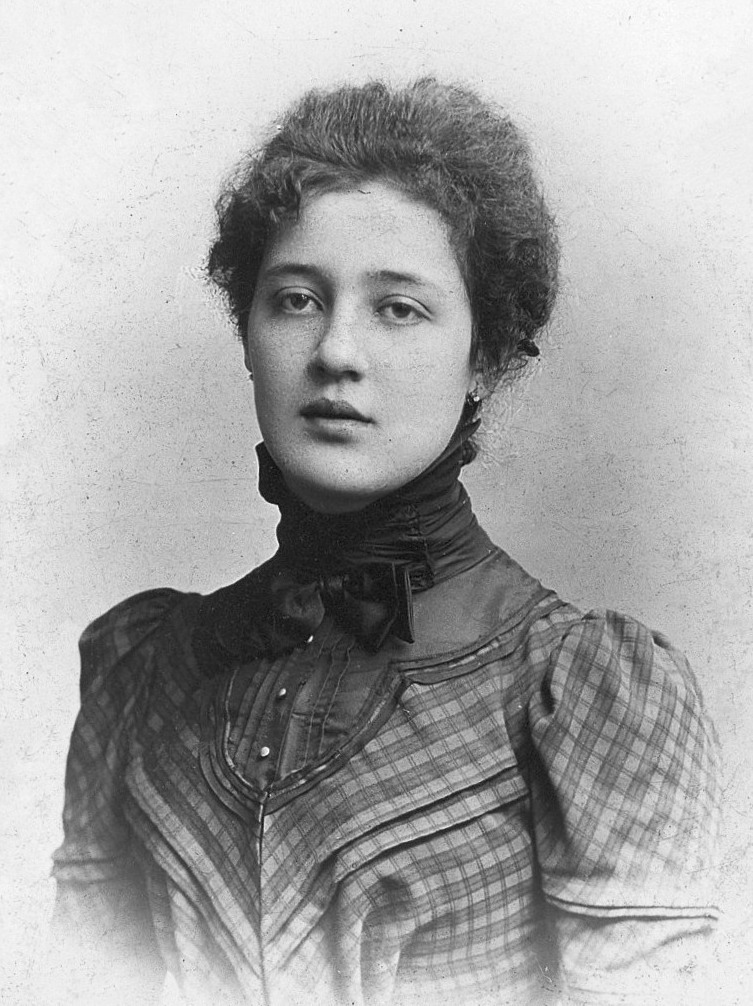
Melanie Klein
Psychoanalysis could be described in the first half of the 20th century as relating to the founder of the discipline, Sigmund Freud, as if he were an authoritarian father. At least he was seen that way by many, although this is undoubtedly a caricature. However, the second half of the 20th confirmed Melanie Klein as the psychoanalyst whose impact on both the theoretical framework of psychoanalysis, as well as its clinical practice, remarkably has been as great as that of the ‘father’ of psychoanalysis. Should we then think of her as the ‘mother’ of psychoanalysis?
‘It was Klein’s extraordinary ability to enter into the world of very young children that brought us the whole new concept of the existence of an internal world.’
https://www.fembio.org/biographie.php/woman/biography/melanie-klein/
Edna O’Brien
“Edna O’Brien was both cause celebre and national pariah. The moral hysteria that greeted Country Girls ensured that both it and O’Brien have become era-defining symbols of the struggle for Irish women’s voices to be heard. O’Brien was not only giving voice to the voiceless but also washing Ireland’s dirty laundry in public – laundry that is still proving in need of a rinse. I fell in love with the deep, beautiful humanity of her prose and the incautious honesty of her portrayal of the Irish female experience.” Eimear McBride
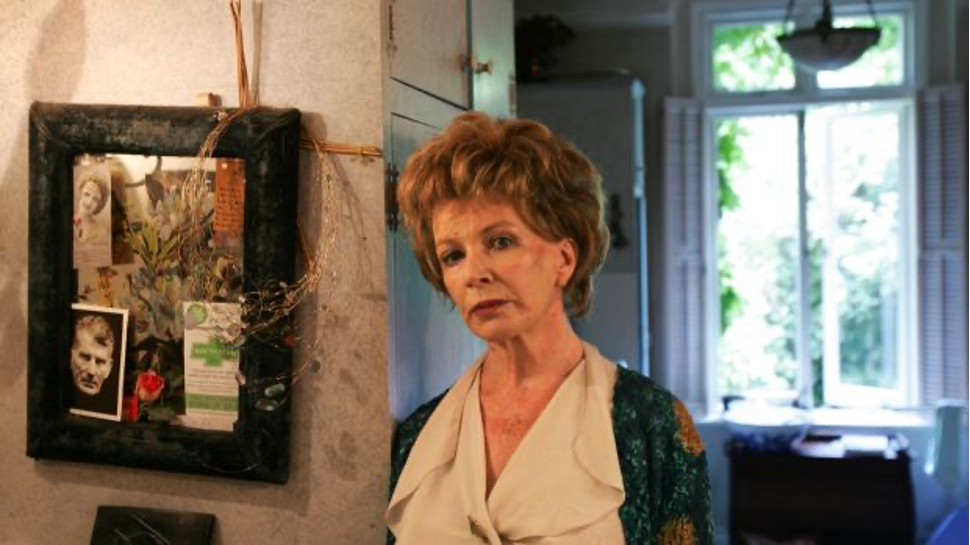
https://www.fembio.org/biographie.php/woman/biography/edna-obrien/
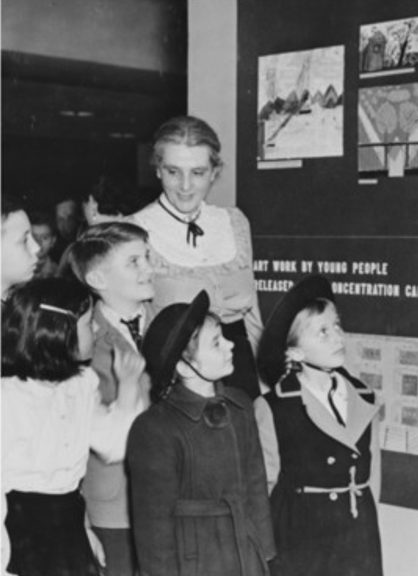
Marie Paneth
Austrian-British artist, pioneering child therapist and writer
125th birthday August 15th, 2020
Standing more than 6ft tall, Marie Paneth was a woman of great intellect and physical presence who mingled with the cleverest minds in Vienna and New York before the war. She corresponded with Sigmund Freud and worked with renowned child psychologist Heinz Hartmann before teaching art to children in the London Blitz of the 1940s. In 1945 she helped rebuild the shattered lives of 300 children flown to the UK after the concentration camps were liberated.
In 1945, three months after Germany and Austria were occupied by Allied Forces, 300 Jewish children (many Polish) were brought from concentration camps to a school by the shores of Lake Windermere in the UK. They are known as the Windermere Children, about whom a very moving BBC dramatized documentary has been made. In photos of the group, one notices a tall beautiful woman. This was Marie Paneth, then 50, an artist, art therapist and writer, and herself a Jewish exile born in Austria.
https://www.fembio.org/biographie.php/woman/biography/marie-paneth/
Marina Carr
Marina Carr, Irish playwright was brought up in County Offaly. A graduate of University College Dublin, she has written extensively for the theatre. She has taught at Villanova, Princeton, and currently teaches in the School of English, Dublin City University. Awards include the Susan Smith Blackburn Prize, the Macaulay Fellowship, the E. M. Forster Prize from the American Academy of Arts and Letters, and the Wyndham Campbell Prize. She lives in Dublin with her husband and four children.

PORTIA COUGHLAN 1996 Irish play about the lost sibling
This is a rare, raw and powerful play about a 30 year old woman whose twin, Gabriel, died when they were 15—rare in its brilliant portrayal of the effect of the loss on the surviving twin and every member of the family. I know of no other play that gives the sense of the pain and confusion that pervades a family where a sibling has died. Shakespeare, Ibsen, Strindberg, Tennessee Williams, Sean O’Casey, David Storey, all replacement children, portray family turmoil but none, so directly, the haunting and inescapable presence of the dead child.
Marina Carr, a classicist known for her plays about Greek mothers and wives (Girl on an Altar; Hecuba; Phaedre), is hailed also for her bold portrayals of Irish women. Two of her later plays focus on endless childbirths: one mother had 16 children and lost the youngest; in the other (Woman and Scarecrow), a woman faces death, gaunt, ill and haggard after giving birth eight times and losing her ninth. But in Portia Coughlan we have a family paralysed by the son’s death, each one isolated, unable to process the grief, guilt or blame.
For Portia, her twin’s absence is a constant tormenting presence, destroying her ability to function as wife and mother. Her family beg her to forget him.
Portia: Forget Gabriel! He’s everywhere, Daddy. Everywhere. There’s not a corner of any of your forty fields that don’t remind me of Gabriel. His name is in the mouths of the starlin’s that swoops over Belmont hill, the cows bellow for him from the barn on frosty winter nights. The very river tells me that once he was here and now he’s gone. And you ask me to forget him. When I lie down at the end of another impossible day, I pray for the time — Daddy, ya don’t understand nothin’. (p. 22)
She turns to drink.
The play is also a study of twinship. Portia is entwined with the lost brother and cries:
Came out of the womb holdin’ hands…oh, Gabriel, ya had no right to discard me so, to float me on the world as if I were a ball of flotsam. Ya had no right. (p. 20)
Particularly powerful is the fury at the mother who still favours the brother. Shocking, too, is Portia’s fear of attacking her own children. As I describe elsewhere, this was a crippling feature in my patients whose parents had lost a child – the unshakeable fear that they had caused the death and that they remain dangerous, murderous. As one patient said to me: ‘You say I think I’m lethal. I know I am.’ (Adams, 2022, p. 2)
Portia: When I look at my sons…I see knives and accidents and terrible mutilations. Their toys is weapons for me to hurt them with, givin’ them a bath is a place where I could drown them. And I have to run from them and lock myself away for fear I cause these terrible things to happen. (p. 41)
She fights with everyone to leave her alone while, throughout it all, she is desperate for their love and comfort, wishing they could talk about Gabriel and what it’s like to be a twin. She drifted into marriage too young, not deserving of an independent life of her own when she had caused the death of another.
Strangely, the play was commissioned by the Dublin National Maternity Hospital—a world of dead babies as well as newborns, and the setting in James Joyce’s Ulysses where Mrs Purefoy is having ‘yet another child (her 9th living child, 12th overall)’:
One born every second somewhere. Other dying every second. Since I fed the birds five minutes. Three hundred kicked the bucket. Other three hundred born, washing the blood off, all are washed in the blood of the lamb, bawling maaaaaa. (U p. 208)
There are echoes of Joyce throughout the play, as though subliminally aware, perhaps, of Joyce’s own struggle with a lost brother. As in Finnegans Wake, a river flows through the play, with images of the dying merging with the river, like Anna Livia Plurabelle and the river Liffey:
A way a lone a last a loved a long the . . . riverrun (FW 628, 1)
- Bibliography
- Adams, M. (2022). James Joyce and the Internal World of the Replacement Child, Routledge.
- Carr, M. (1996). Portia Coughlan, Faber & Faber.
- Joyce, J. (1960/80). Ulysses, The Bodley Head.
- Joyce, J. (2012). Finnegans Wake, Oxford World Classics, OUP.
 Mary Adams